
- Leave a review
- Bookmark
- Share
- Report
- prev
- next
Description
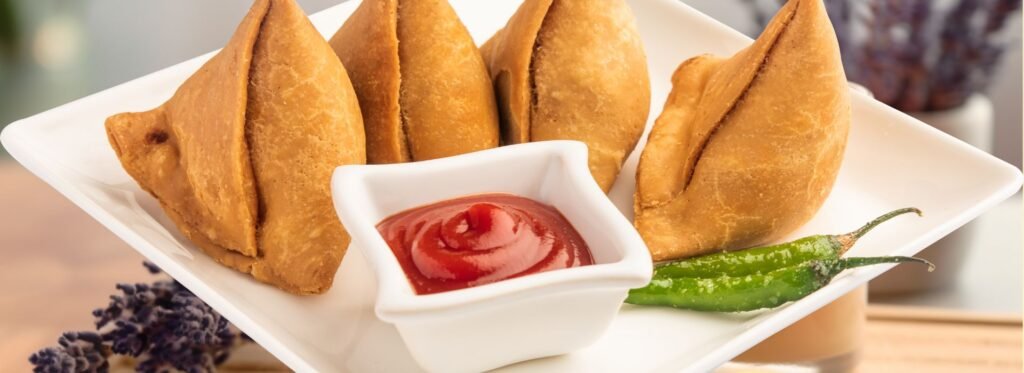
World Samosa Day, celebrated on September 5, is a global recognition of the legendary snack that brings people together. This unofficial food holiday honors samosas, known for their crisp exterior and flavorful filling, and their global variations like sambusa in East Africa or the Middle East.
History
The samosa’s story begins not in India, but in the ancient Middle East, specifically Persia. It was known as "sanbosag", a small meat-filled pastry that was easy to carry on long journeys. Merchants, traders, and travelers loved it because it stayed fresh and tasty during desert treks and mountain crossings.
By the 13th century, the snack had made its way to the Indian subcontinent through Silk Road trade routes. It was quickly adopted and adapted by royal kitchens during the Delhi Sultanate. Over time, Indian chefs added local spices, herbs, and vegetables, transforming the original meat-filled pastry into what we now recognize as the Indian samosa.
As centuries passed, the samosa became a favorite street food across South Asia, and every region gave it a new identity. Punjab made it big and spicy, while Bengal turned it into the delicate singara. Muslim cultures shaped it into sambusa or sambusak, common during Ramadan.
In modern times, thanks to migration and globalization, the samosa has gone global. From Indian restaurants in New York to street food stalls in Nairobi and frozen samosas in UK supermarkets—this humble triangle now feeds cravings on every continent.
How To Celebrate
1. Eat a Samosa (or Five)
The simplest way to celebrate World Samosa Day – September 5 is to indulge in your favorite samosa. Try different fillings or spice levels to find your new favorite.
2. Host a Samosa Party
Invite friends or family and ask everyone to bring a different variety—vegetable samosa, chicken samosa, cheese samosa, and even fusion samosas with ingredients like chocolate or mac and cheese!
3. Try Making Samosas at Home
If you’ve only ever eaten frozen samosas, try making them from scratch! There are tons of recipes online for every skill level.
4. Support Local Businesses
Buy from your favorite samosa vendor or try a new restaurant. Celebrate the cooks who make magic happen in those golden triangles.
Amazing Facts
1. The Samosa is Over 1,000 Years Old
The earliest mentions of samosas date back to the 10th century, originally eaten by royalty and travelers in Persia and Central Asia.
2. Spicier in the North, Sweeter in the South
In North India, samosas tend to be spicy and big (like the famous Punjabi samosa). In South India, you’ll sometimes find sweet or coconut-filled versions.
3. Frozen Samosas Are a Multi-Million Dollar Market
Thanks to global demand, frozen samosas are now a staple in supermarkets across the UK, US, and Canada, especially in the South Asian food aisle.
4. Samosas Are Usually Eaten with Chutneys
Traditionally, samosas are served with green mint chutney or tamarind chutney—but ketchup works in a pinch too!
Why We Love
-
Crispy on the outside, spicy on the inside—need we say more?
-
It’s affordable and available at every street corner.
-
You can find it in fancy restaurants or roadside dhabas, and it’s always delicious.
-
It fits every occasion—tea time, festivals, lunch box, or midnight craving.
-
It’s vegetarian or non-vegetarian, baked or fried, spicy or mild—something for everyone.
Importance
1. It Supports Small Food Businesses
Street vendors, home chefs, and local restaurants often serve the best samosas. Celebrating this day encourages people to support local samosa makers, boosting small businesses.
2. It Sparks Food Conversations
People love talking about food. Whether it’s the best vegetable samosa recipe or a debate between cheese vs chicken samosa, this day gets foodies chatting and sharing stories.
3. It Promotes Cultural Respect
When you learn about the samosa's roots, you also learn about the cultures it comes from. That builds respect and appreciation for diverse traditions.


Add a review